Ding Hsu
Calligraphy Becoming Human
When visiting museums, one can observe the examination papers of ancient scholar-officials. Their elegant regular script and refined compositions were so exemplary that successive imperial examination systems prioritized the selection of calligraphers capable of artistically rendering literary, historical, and philosophical masterpieces. Those who excelled in this art form naturally ascended to elite status, gaining entry into the nation's political and economic power structures.
Research reveals that Chinese ink painting masterworks inherently depend on calligraphic elements and seal engraving techniques. Without these components, such works would lose their artistic integrity. This intrinsic connection constitutes the unique Chinese aesthetic principle of "Shuhua Tongyuan" (shared origin of painting and calligraphy).
As a vital component of paleographic studies, calligraphy serves as a living record of China's evolving humanistic landscape. Through analyzing stylistic transformations in script forms over millennia, we gain profound insights into the nation's cultural metamorphosis.
Calligraphy functions as a cultural carapace, meticulously preserving the form and essence of pictographic characters. More significantly, it embodies the spiritual core of Chinese poetry, governance, and socioeconomic systems. This art form has evolved into both a cultural identifier and the quintessential emblem of Chinese civilization.
These observations help explain calligraphy's enduring preeminence. Neither the external influences of Western artistic traditions during China's modernization, nor internal transformations brought by socioeconomic upheavals, have diminished its paramount status. This explains the persistent cultural phenomenon across Chinese society - from emperors to farmers - of taking profound pride in exquisite penmanship.
If science symbolizes China's future trajectory, calligraphy encapsulates its historical consciousness. As a quintessential cultural artifact, it serves as an indispensable landmark for those seeking to comprehend China's past, particularly when contemporary perspectives grow detached from traditional humanistic values.
Characteristics of Calligraphy
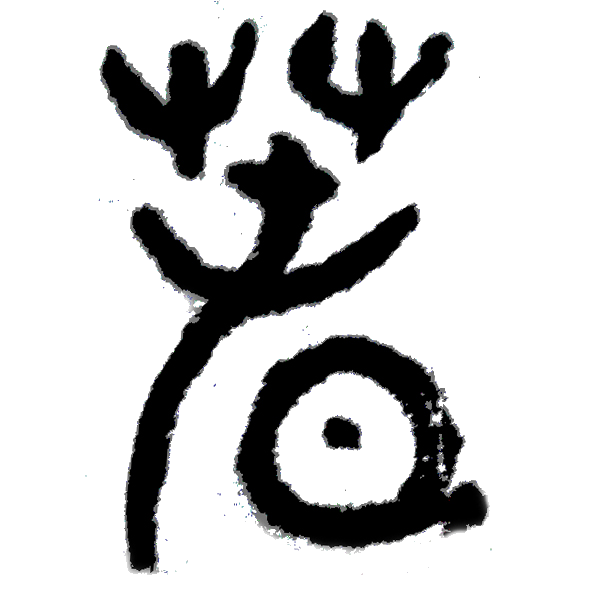
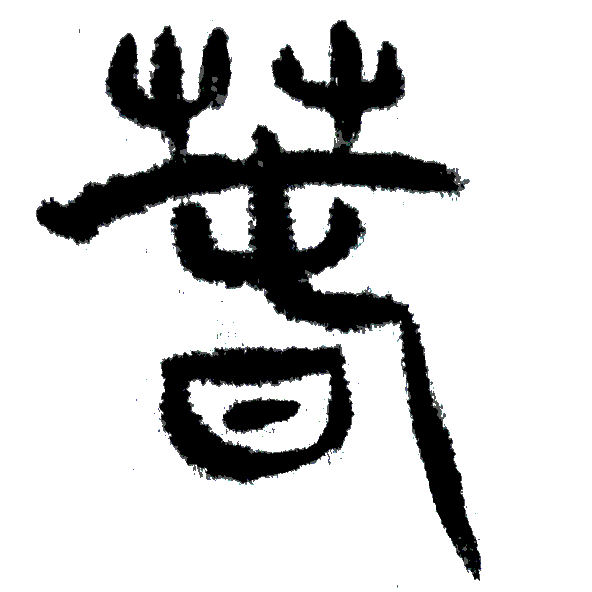
Calligraphic Maturity: The Consummation Stage The Case for the Word “Spring” | ||||
Oracle...... 3000 years ago
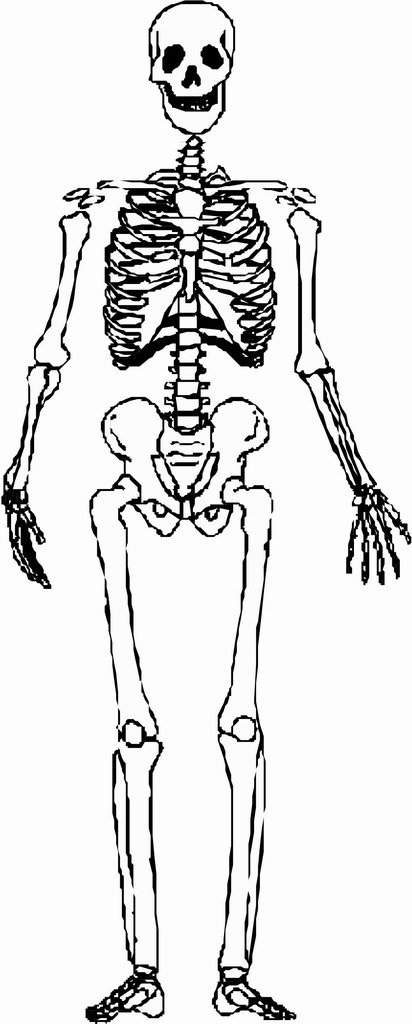
| Much like the skeletal framework governing human form, early Chinese script possessed its own structural bones . The Shang dynasty oracle scripts, though mechanically recorded on tortoise carapaces, represent literacy's Neolithic phase - a cultural milestone where creating durable written records itself was the artistic achievement. True calligraphic artistry would emerge only after this primal documentation stage.。 | Oracle:spring
| ||
Golden Script (Zhongdingwen) ...... 1200 years ago | Bronze inscriptions stand as petrified nobility of antiquity - their fragmented forms resembling partial skeletons of ancient aristocrats. Though bereft of heads or limbs, these scriptural fossils pulsate with weathered grandeur. Each corrosion pit and mineral deposit encodes millenniums of cultural sedimentation. Cast onto ritual bells and ceremonial tripods (hence termed Zhongdingwen 钟鼎文), these metallic glyphs transcend mere documentation. Their very materiality - the bronze's crystalline structure interacting with corrosive elements - becomes a dialogue between human artifice and natural entropy. What we perceive as "mottling" is in fact the cosmos inscribing its own calligraphy upon human civilization. | Zhongdingwen:sping
| ||
The Small Seal ......Beginning of the Qin Dynasty
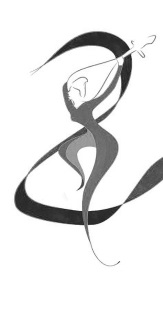
| The seal script (篆书) evolved from bronze inscriptions while preserving their mineralized patina. Through deliberate aesthetic enhancement, scribes introduced symmetrical elegance into these archaic glyphs. This formal refinement transformed writing into choreographed ideograms - the Greater Seal Script (大篆) embodies the kinetic grace of ritual dance, evoking Han Dynasty terracotta figurines in suspended motion or Dunhuang apsaras captured mid-whirl. Imagine ceremonial observers clad in cumulus-patterned silks, sipping sacred liquor from bronze jue vessels. The script's world burgeoned with baroque splendor - every sinuous stroke a frozen dance gesture, every composite character an orchestrated visual symphony.Much like the skeletal framework governing human form. | seal script:sping
| ||
clerical script
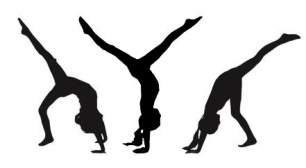
| The Clerical Script Revolution: From Choreographic Abstraction to Geometric Discipline Evolving from the seal script's ornamental complexity, clerical script (隶书) achieved aesthetic purification through formal minimalism. This calligraphic reformation discarded curvilinear redundancies, creating a visual syntax akin to athletic precision rather than ritual dance. The script's metamorphosis paralleled performative arts' technical evolution: where seal script embodied the free-form xieyi (写意) dance tradition, clerical script codified its movements into angular exactitude. Its squared glyphs with acute angles and dynamic vectors resemble modern artistic gymnastics - a discipline combining athletic rigor with geometric perfection. This paradigm shift from organic fluidity to architectonic discipline marked the birth of Chinese typographic structuralism. | clerical script:sping | ||
Calligraphic Maturity: The Consummation Stage | ||||
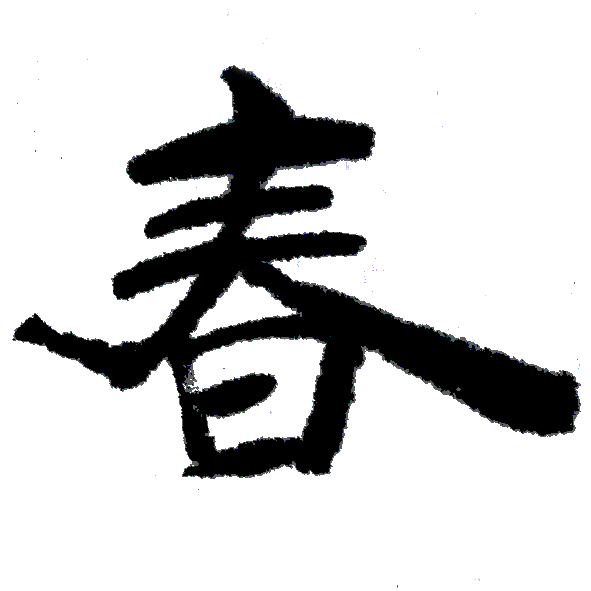
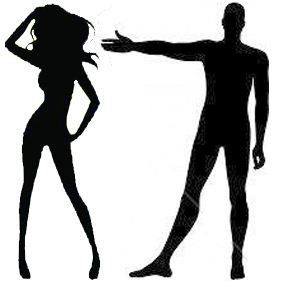
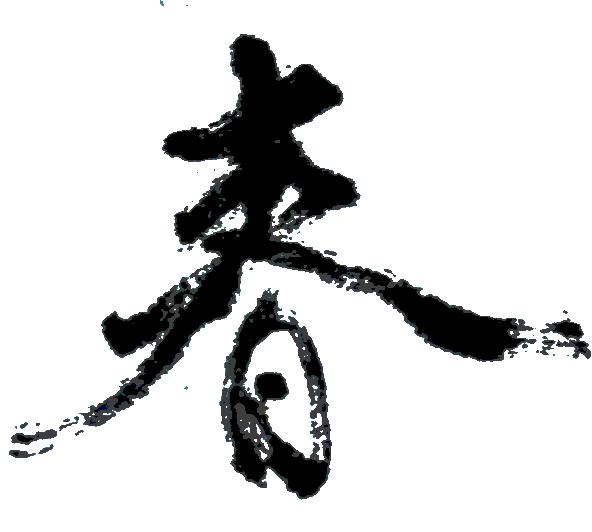
regular script (Chinese calligraphic style) | The structure of calligraphy resembles that of handsome men and beautiful women—harmoniously proportioned, with elegant lines and a dignified posture. | regular script:sping
| ||
semi-cursive script (Chinese calligraphic style)
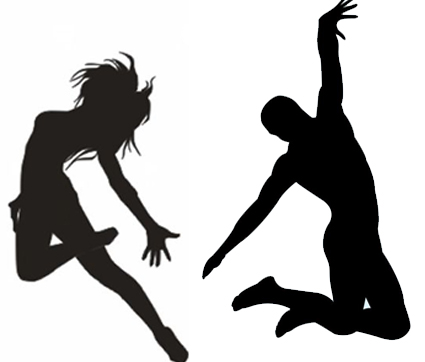
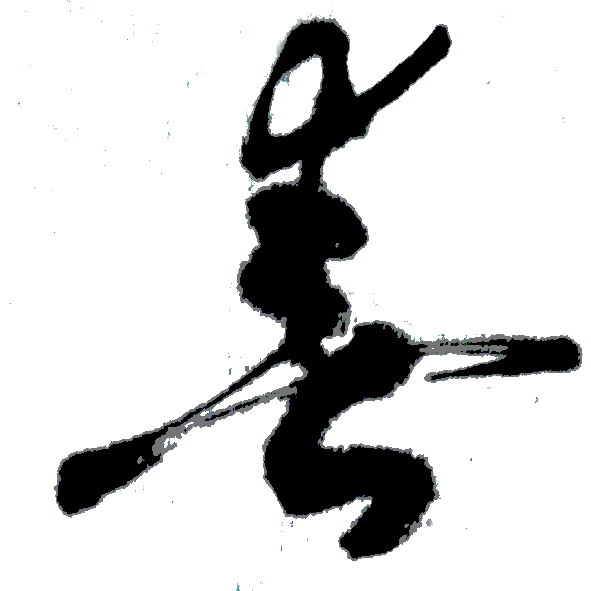
| Running script is like handsome men and beautiful women stretching their limbs with grace—executing supple motions that maintain controlled dynamism within disciplined forms. | semi-cursive script:sping
| ||
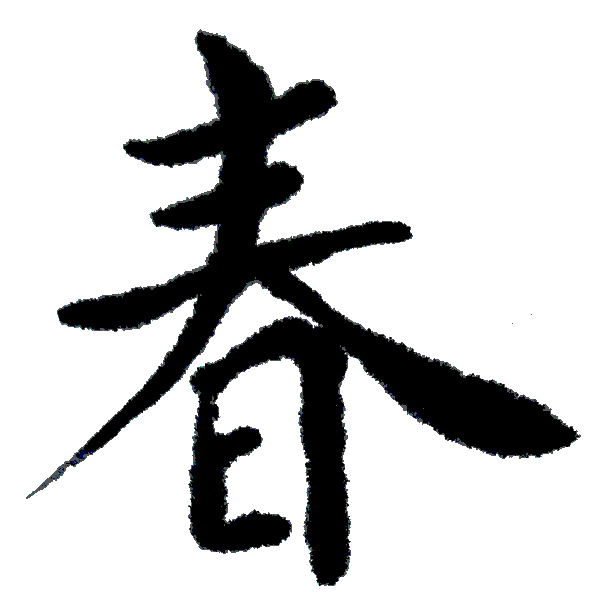
cursive script (Chinese calligraphic style) | Cursive script is choreographed abstraction—where compared to regular script, the head may not align with its conventional placement, nor the feet occupy their expected positions, occasionally veiled like a dancer's form obscured by swirling robes. Sun Guoting's Treatise on Calligraphy codifies how these calligraphic "limbs" may be artistically displaced and reconfigured. Yet through such metamorphoses, the script must retain coherent anthropomorphic integrity: a dancer's body cannot lack limbs mid-performance, much less morph into an elephant's stomp, giraffe's lope, or turtle's crawl across the page. | cursive script:sping
| ||
l Why is the Pre-Kai Script Era Termed the "Gestation Period"?
l The embryonic phase of calligraphy is defined by radical morphological flux. When comparing Oracle Bone Script with mature Regular Script (Kai Shu), their genetic lineage seems nearly unrecognizable—akin to distinguishing a three-month fetus from a fully-formed adult. What transformative alchemy occurred during this protracted evolution of Chinese script?
l
l Oracle Bone Script (甲骨文):
l The primal imprint of linguistic codification, etched onto turtle plastrons and ox scapulae—a visceral communion with Shang dynasty divination.
l Bronze Script (金文):
l An era of splendid complexity: Seven Warring States (Qi, Chu, Yan, Han, Zhao, Wei, Qin) cultivated distinct glyphic dialects. Though sharing ancestral roots, their scripts diverged like linguistic tributaries—similar yet sovereign.
l Great Seal Script (大篆):
Qin Shihuang's imperial erasure: Six conquered scripts were consigned to oblivion, their surviving fragments taxonomized under this archetypal label—a political act of cultural homogenization.
Small Seal Script (小篆):
Li Si's calligraphic dictatorship: The Qin chancellor's brush standardized every stroke into crystalline precision. This script achieved systemic autonomy—its aesthetic innocence reminiscent of childhood's graceful contours, not yet hardened by functional demands.
Clerical Script (隸书):
Han dynasty pragmatism: Seal Script's curvilinear elegance was squared into utilitarian efficiency. Like adolescents rebelling against childhood forms, its angular rebellion manifested through sharpened terminals and compressed verticals—a script coming into its structural identity.
The Embryonic Paradox:
Writing evolved as both tool and art—increasingly functional yet persistently beautiful. The calligraphic gestation period embodies this dialectical progression: from pictographic complexity to pragmatic simplification, from ritualistic inscription to aesthetic sublimation. Each stroke contraction and radical abstraction marked a step toward the ultimate maturity of Kai Shu—the script that would crystallize China's calligraphic DNA.
Why is the Post-Kai Script Era Considered Calligraphic Maturity?
The ascendancy of Regular Script (Kai Shu) marked calligraphy's evolutionary terminus—for preceding dynastic upheavals always triggered script obsolescence or reform, yet post-Kai regimes, however turbulent, never abandoned its foundational framework. From Tang memorials to Qing edicts, even modern bureaucratic documents, Kai Shu persists as China's orthographic backbone. All initiates now instinctively train through its disciplined forms. Coincidence?
Kai Shu's Immutable Supremacy:
Structural Perfection: Optimized stroke ratios achieving mathematical equilibrium (e.g., 永字八法's黄金分割)
Semiotic Clarity: Elimination of seal script's pictographic ambiguity (隶变后的符号定型化)
Aesthetic Purity: Wang Xizhi's 楷法三昧 principles distilled beauty into geometric essentialism
Ergonomic Mastery: Balanced brush pressure distribution enabling sustained bureaucratic documentation
This tetrahedral excellence—structural, semantic, aesthetic, utilitarian—crowned Kai Shu as the "Ultimate Script Archetype." No subsequent script (行书's cursive flirtations, 草书's abstract rebellion) could challenge its pedagogical primacy. Like Latin in medieval Europe or Arabic calligraphy's Naskh script, Kai Shu became the unshakable lingua franca of brushwork—a cultural genome so perfectly adapted that evolution itself ceased.
 Luxury Gifts in Stock
 Lucky Flow Feng Shui
 Luxury Limited Edition Artwork
 June 25,2025
 June 25,2025
 June 03,2025
Copyright ©2025 All Rights Reserved by Craftsman Mei Culture Group